
In stock
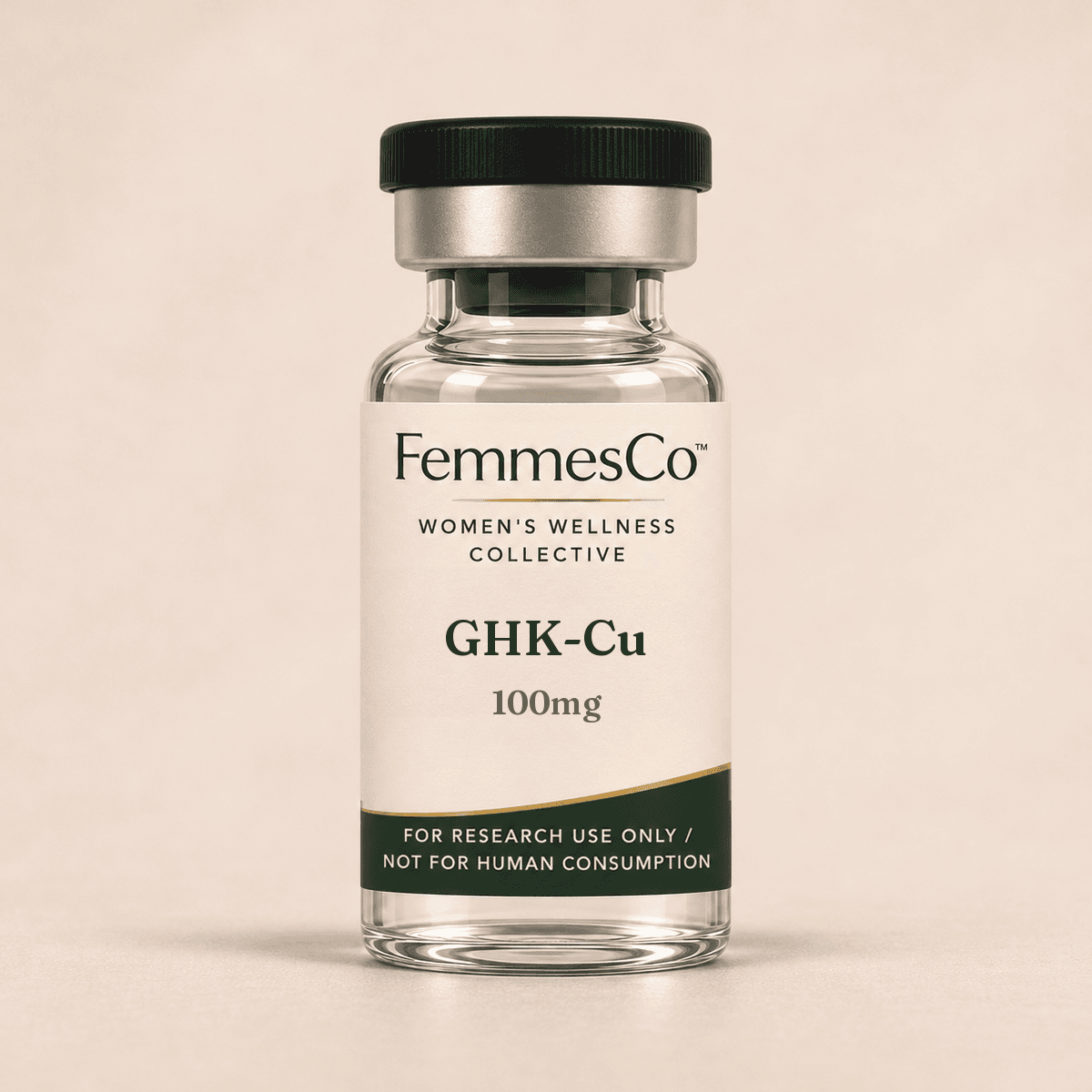
GHK-Cu
100mg · Single vial · Lyophilized powder
Skin & regenerative research
GHK-Cu is a copper-binding 3-residue compound (glycyl-L-histidyl-L-lysine), used in dermatological, wound-healing and cellular regeneration research.
- Studied extensively in women's skin research including collagen synthesis, elastin remodeling and photoaging research
- Referenced in hair follicle research contexts
- Appears in wound repair and cellular regeneration research
Order
- Dose
- 100mg
- Pack size
- Single vial
- Form
- Lyophilized powder
- Storage
- 2–8°C
In vitro laboratory research use only · Not for human or veterinary use · Batch documented · Third-party tested · Ships from Canada
§ Research
Research · GHK-Cu
Overview
GHK-Cu is the copper(II) complex of the Gly-His-Lys sequence, a naturally occurring three-residue fragment first isolated from human plasma by Loren Pickart in 1973. GHK binds Cu(II) with high affinity through the histidine imidazole, the glycine amino group, and a deprotonated amide nitrogen, forming a stable complex at physiological pH. Plasma GHK concentrations have been reported to decline with age. It is widely used as a reference compound in fibroblast, extracellular matrix, and copper-transport research, and is a common ingredient in topical cosmetic formulations studied for skin barrier and dermal matrix endpoints.
Mechanism of action
GHK is proposed to act as a copper carrier, delivering Cu(II) to cells in a non-toxic form and supporting copper-dependent enzymes such as lysyl oxidase and superoxide dismutase. In cultured fibroblasts, the complex stimulates synthesis of collagen, decorin, and glycosaminoglycans, and modulates the balance of matrix metalloproteinases and their tissue inhibitors. Gene-expression analyses using the Broad Institute Connectivity Map report that GHK shifts the expression of a large set of human genes, including pathways related to inflammation, antioxidant response, and tissue remodeling, although the upstream receptor or sensor remains uncharacterized.
Key research findings
- 01
In vitro fibroblast studies established stimulation of collagen synthesis by the copper complex, first reported in 1988.
- 02
Connectivity Map analyses characterize GHK-associated changes in the expression of genes involved in DNA repair, antioxidant defense, and tissue remodeling.
- 03
Preclinical rodent models, including anterior cruciate ligament reconstruction and experimental colitis, have characterized effects on tissue repair and inflammatory endpoints.
- 04
Formulation studies have examined liposomal encapsulation, hydrogel loading, and skin permeation of the complex for topical applications.
Published references
GHK and DNA: resetting the human genome to health
Exploring the beneficial effects of GHK-Cu on an experimental model of colitis and the underlying mechanisms
The information above is derived from published preclinical and clinical research. It is provided for educational purposes only and does not constitute medical advice, diagnosis, or treatment recommendations.