
Coming soon
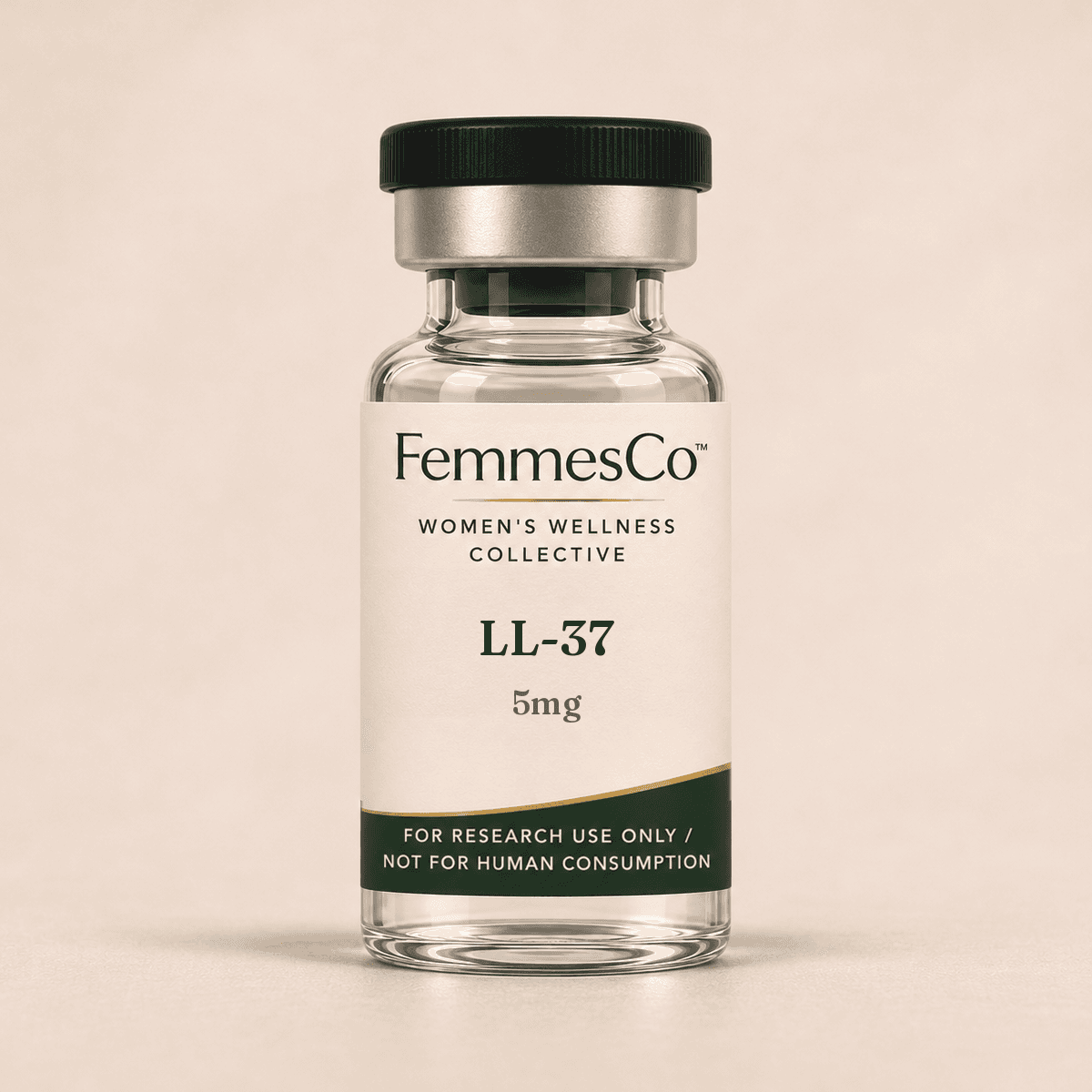
LL-37
5mg · Single vial · Lyophilized powder
- Dose
- 5mg
- Pack size
- Single vial
- Form
- Lyophilized powder
- Storage
- 2–8°C
In vitro laboratory research use only · Not for human or veterinary use · Batch documented · Third-party tested · Ships from Canada
§ Research
Research · LL-37
Overview
LL-37 is the sole human cathelicidin, a 37-residue cationic amphipathic sequence named for its two N-terminal leucine residues. It is released from the precursor protein hCAP18, encoded by the CAMP gene, by proteinase 3 in neutrophils and by kallikreins in skin. It is expressed by neutrophils, epithelial cells, and keratinocytes, and its transcription is strongly induced by 1,25-dihydroxyvitamin D3 through a vitamin D response element in the CAMP promoter. It is a reference molecule in innate immunity, host-defense, and epithelial barrier research, and it is the most extensively studied member of the cathelicidin family.
Mechanism of action
In aqueous solution LL-37 is largely unstructured but adopts an alpha-helical conformation on contact with membranes. Its net positive charge drives binding to anionic bacterial membranes, which it disrupts via carpet-like or toroidal-pore mechanisms, and it neutralizes lipopolysaccharide. Beyond direct antimicrobial activity, LL-37 is a signaling molecule: it acts through formyl receptor FPR2, the P2X7 purinergic receptor, and EGFR transactivation to influence chemotaxis, cytokine release, and epithelial migration. Complexes of LL-37 with self-DNA or RNA activate TLR9 and TLR7 in plasmacytoid dendritic cells, a pathway implicated in psoriasis.
Key research findings
- 01
In vitro assays demonstrate broad-spectrum activity against Gram-positive and Gram-negative bacteria, fungi, and enveloped viruses, along with antibiofilm effects.
- 02
Studies of skin and mucosal disorders, including psoriasis, rosacea, and periodontitis, have characterized altered LL-37 expression and processing.
- 03
Oncology research describes context-dependent and sometimes opposing effects, with tumor-promoting activity in some cancer types and suppressive activity in others.
- 04
Early-phase clinical studies have examined topical LL-37 in chronic venous leg ulcers, characterizing safety and wound-area endpoints.
Published references
The chemistry and biology of LL-37
Significance of LL-37 on Immunomodulation and Disease Outcome
The information above is derived from published preclinical and clinical research. It is provided for educational purposes only and does not constitute medical advice, diagnosis, or treatment recommendations.