
Certivos verified
Janoshik Analytical
Independent Analysis
- Test date
- 2026-06-05
UBUWXDK69KKE→ View certificate
This site supplies research compounds and laboratory materials for in vitro research only. Not for human or veterinary use.
I confirm I am 21 years of age or older and that any purchase is for laboratory research use only.
Launch — up to 30% off Retatrutide and Semaglutide. Shop the catalog
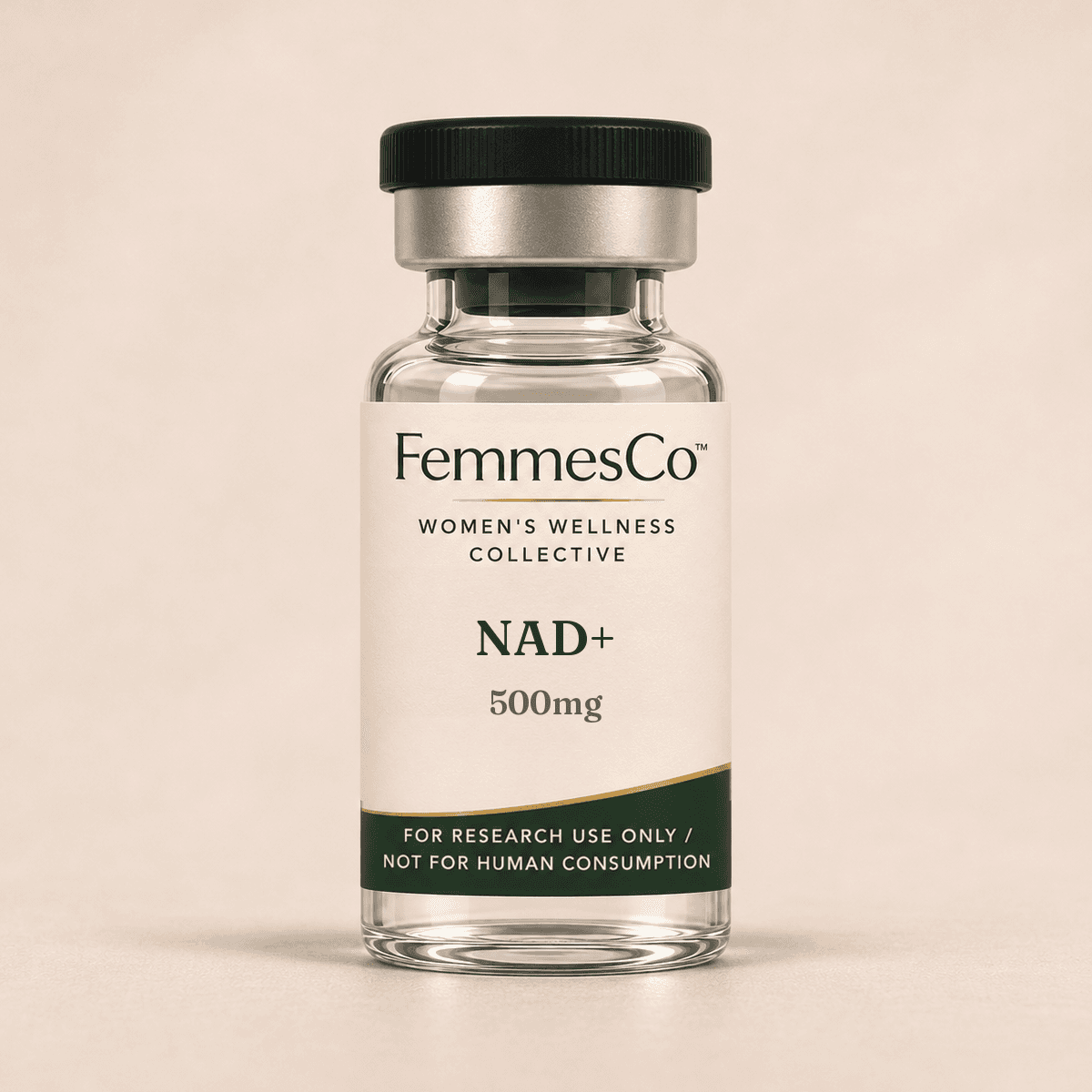
In stock
500mg · Single vial · Lyophilized powder
Longevity & metabolic research
NAD+ (nicotinamide adenine dinucleotide) is a coenzyme central to cellular energy metabolism and mitochondrial function, used in longevity, metabolic and DNA-repair research.
Order
In vitro laboratory research use only · Not for human or veterinary use · Batch documented · Third-party tested · Ships from Canada
§ Verification — Batch 2026-05
Janoshik Analytical
Independent Analysis
Certificates are issued and hosted by Certivos.
§ Research
NAD+ (nicotinamide adenine dinucleotide, oxidized form) is a ubiquitous dinucleotide cofactor composed of nicotinamide mononucleotide and adenosine monophosphate joined by a pyrophosphate bridge. It functions as a central electron carrier in cellular energy metabolism and as a consumed substrate for several enzyme families. It is a standard reagent in enzymology and metabolic research, and tissue NAD+ levels are widely measured in studies of cellular aging. It is supplied as a reagent for dehydrogenase assays and for studies of sirtuin and PARP enzymology.
As a hydride acceptor, NAD+ is reduced to NADH in glycolysis, the tricarboxylic acid pathway, and fatty acid oxidation, with NADH reoxidized by mitochondrial complex I to drive oxidative phosphorylation. Separately, NAD+ is cleaved as a substrate by sirtuin deacylases, poly(ADP-ribose) polymerases involved in DNA repair, and the CD38/CD157 glycohydrolases, releasing nicotinamide. Cellular pools are maintained primarily through the salvage pathway, in which nicotinamide phosphoribosyltransferase (NAMPT) is rate-limiting, with additional de novo synthesis from tryptophan and the Preiss-Handler pathway from nicotinic acid. Compartmentalized pools in the nucleus, cytosol, and mitochondria are maintained semi-independently.
Rodent and human tissue studies have characterized age-associated declines in NAD+ levels across multiple organs.
Mouse studies have linked tissue NAD+ decline to increased CD38 expression, including on inflammatory macrophages activated by senescent cells.
Preclinical models have characterized the effects of supplying precursors such as nicotinamide riboside and nicotinamide mononucleotide on tissue NAD+ content and sirtuin-dependent signaling.
Early-phase clinical studies have characterized the pharmacokinetics of NAD+ precursors and their effects on blood NAD+ metabolite levels in healthy participants.
NAD(+) metabolism and its roles in cellular processes during ageing
NAD⁺ in aging, metabolism, and neurodegeneration
The information above is derived from published preclinical and clinical research. It is provided for educational purposes only and does not constitute medical advice, diagnosis, or treatment recommendations.
Restock notifications, new compounds, and lab-report updates.
For researchers 21+. No spam.
You can unsubscribe at any time — every email has a link.